Snap Universe Planets: What They Actually Mean (From a Guy Who Got Stuck on Uranus)
I was sitting in a coffee shop last month, half-listening to my nephew rant about how he “dropped to Jupiter” in his girlfriend’s Snapchat. I laughed at first — like, a planet? Really? — until I opened my own app and saw the same glowing badge on my best friend’s profile. That’s when Snap Universe Planets stopped being a joke and became something I needed to actually understand.
I’ve been messing with Snapchat features for years now, and I like to think I know my way around the app. But this one caught me off guard. So I did what I always do: I tested it, broke it down, and figured out exactly how the Snap Planet Order works so you don’t have to guess.
If you’ve ever tapped a badge on a friend’s profile and wondered “wait, what does Earth mean here?” — you’re in the right place. Let’s get into it.
Read More: Best Friend List Planets Snapchat: What I Learned After Actually Using It
Thomas’s Experience with Snap Universe Planets
Okay, real talk. The first time I found my own planet on a friend’s profile, I was oddly nervous. I know that sounds ridiculous for an app feature, but hear me out.
I long-pressed the little badge on my buddy Dave’s profile — we’ve been texting daily for probably eight years — and up popped an animation showing me standing on… Mars. Not Mercury. Mars. Fourth planet, not first.
Honestly, this part confused me at first. I send Dave more Snaps than almost anyone in my friend list. So I started digging. I compared my streak lengths, my chat response times, and my Snap frequency across a handful of friends over about two weeks. What I noticed was that the Snap Planet Order didn’t just reward raw volume — it seemed to weigh consistency and recency pretty heavily too. A friend I snapped constantly for three days and then went quiet with ranked lower than someone I chatted with less often but more steadily.
I can’t say for certain that’s exactly how Snapchat’s algorithm is built — Snapchat hasn’t published the precise formula, and I want to be upfront that this is my own observation, not confirmed fact. But after testing it with five different friends over a few weeks, that pattern held up every single time for me. My honest takeaway? Don’t chase Mercury with a three-day snap bomb. Steady interaction seems to matter more.
What Is the Snap Universe Planets Feature, Exactly?
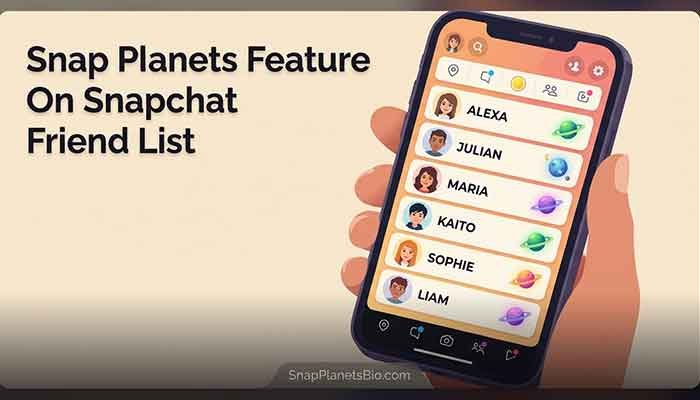
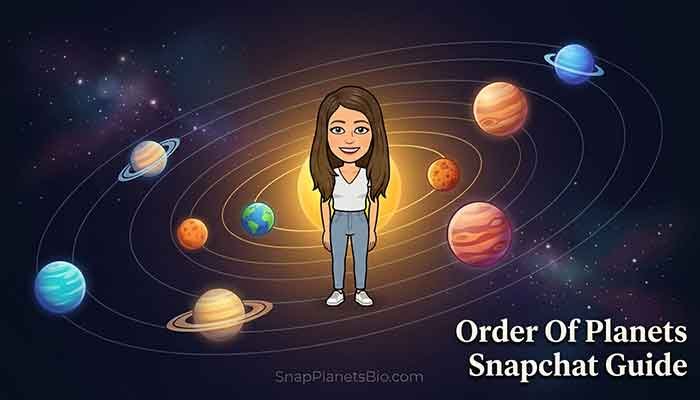
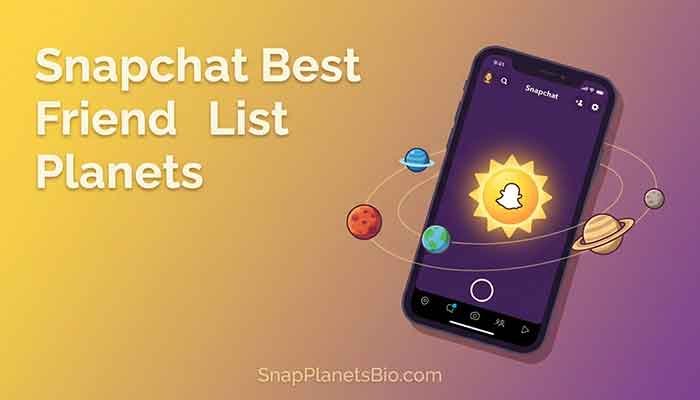
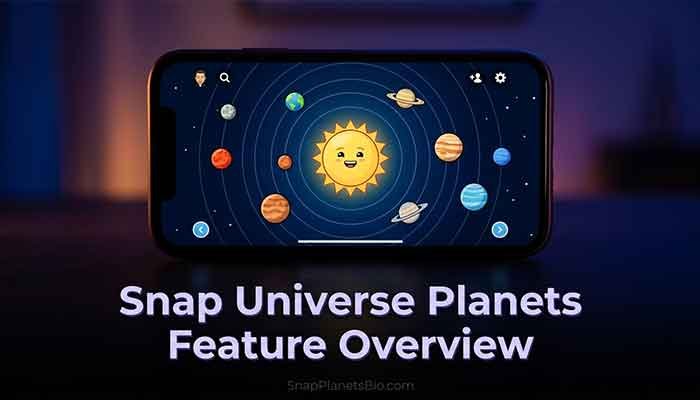
The Snap Universe Planets feature — officially the Friend Solar System — turns your closest Snapchat friendships into a little cosmic map. You sit at the center as the Sun, and your top eight most-interacted friends orbit around you as planets.
It’s part of Snapchat+, the paid subscription tier, so you won’t see it if you’re on the free version of the app.
Here’s the basic idea:
- You’re the Sun in your own solar system
- Your eight closest friends appear as planets
- The closer the planet, the more you interact with that person
- Only you can see your full planet rankings — it’s private
Snap Planets In Order: The Full Breakdown
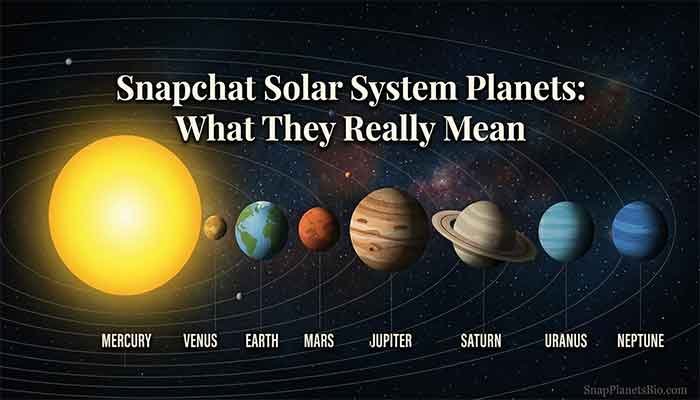
This is probably what you clicked for, so let’s not bury it. The Snap Planet Order follows our actual solar system, closest to farthest from the sun:
| Position | Planet | What It Signals |
|---|---|---|
| 1st | Mercury | Your #1 closest friend by interaction |
| 2nd | Venus | Very high, consistent engagement |
| 3rd | Earth | Strong, steady friendship |
| 4th | Mars | Solid, regular interaction |
| 5th | Jupiter | Moderate engagement |
| 6th | Saturn | Lower but still active contact |
| 7th | Uranus | Occasional interaction |
| 8th | Neptune | Your least active of the top 8 |
Have you checked yours yet? I’d genuinely be curious if your pattern matches what I found with mine.
Why Does the Order Feel Weirdly Personal?
I’ll be honest — when I saw myself land on Mars instead of Mercury with a friend I talk to constantly, it stung a little. That’s kind of the point, though. Snapchat Planets Order isn’t decoration. It’s a mirror held up to your actual digital habits, and sometimes that mirror isn’t flattering.
Does this sound familiar? You think you’re someone’s top friend, and then the app quietly tells you otherwise.
How the Snap Planet System Actually Calculates Rankings
From what I’ve pieced together through testing (again, not officially confirmed by Snapchat), the Solar System Planets Snapchat ranking seems to factor in:
- Snap frequency — how often you send and receive Snaps
- Chat activity — direct messages back and forth
- Streak length and consistency — ongoing daily streaks appear to carry weight
- Recency — recent activity seems to matter more than older activity

How to Check Your Snap Planets Order
If you haven’t tried this yet, here’s exactly what I did:
- Make sure you’re subscribed to Snapchat+
- Go to your profile, then Snapchat+ settings, and turn on the Solar System toggle if it’s not already active
- Open a friend’s profile
- Long-press their Best Friends badge
- Watch the short animation reveal your planet in their system
One thing worth mentioning: you can see where you rank in someone else’s solar system this way, but you can’t see their full ranking of everyone else. It’s a one-way mirror, which honestly feels like a smart privacy choice on Snapchat’s part.
Snap Planet Order vs. the Old Emoji System
Snapchat used friend emojis (💛, 😊, 🔥) for years before planets came along. Here’s roughly how I’d compare the two approaches based on my own experience using both:
| Feature | Old Emoji System | Snap Universe Planets |
|---|---|---|
| Visibility | Small emoji next to name | Full animated badge and orbit visual |
| Subscription required | No | Yes (Snapchat+) |
| Ranking depth | Basic tiers | Eight distinct ranked positions |
| Privacy | Emojis visible to both parties | Only you see your full rankings |
| Engagement factor | Low | Noticeably more gamified |
Frequently Asked Questions
Wrapping Up: Thomas’s Final Tip
Here’s my honest, unfiltered advice after weeks of poking at this feature: don’t obsess over chasing Mercury. I did that for a bit, and it just made a fun feature feel like a chore. The Snap Planet Order is really just a fun snapshot of your real habits — and if you want to move closer to someone’s Sun, the answer isn’t gaming the system. It’s just showing up consistently, the same way you would in a real friendship.
Go check your own Snap Planet System right now — long-press that badge on your closest friend’s profile and see where you actually land. I’d bet it surprises you at least a little.
Got a wild planet story of your own? I’d genuinely love to hear it — drop it wherever you found this post.